Banqiao flower market in photos

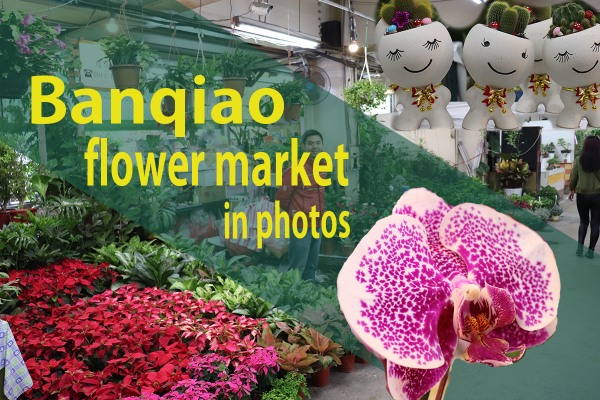
Over the weekend we headed out to the Banqiao Flower Market to take a look around and see if we could find some dried flowers. There were many beautiful flowers but on this day many of the stalls were closed. Few of the stores were open and even fewer people showed up before 11 a.m. on a Sunday morning. This may be because anyone looking for flowers on the weekend might head over to the bigger market, The Taipei Weekend flower market. Fewer people actually made the experience a lot more pleasant, allowing us to take our time and snap some great photos of the orchids. The orchids were really a beautiful site with clear love and devotion poured into looking after them. The bonsai trees were the same there was clear love and care put into pruning and shaping the trees, it looked like hours and hours worth of painstaking work.

Google maps: https://goo.gl/maps/paq2DjhgiDL2 

A review of the WeMo electric scooter sharing app and how it works

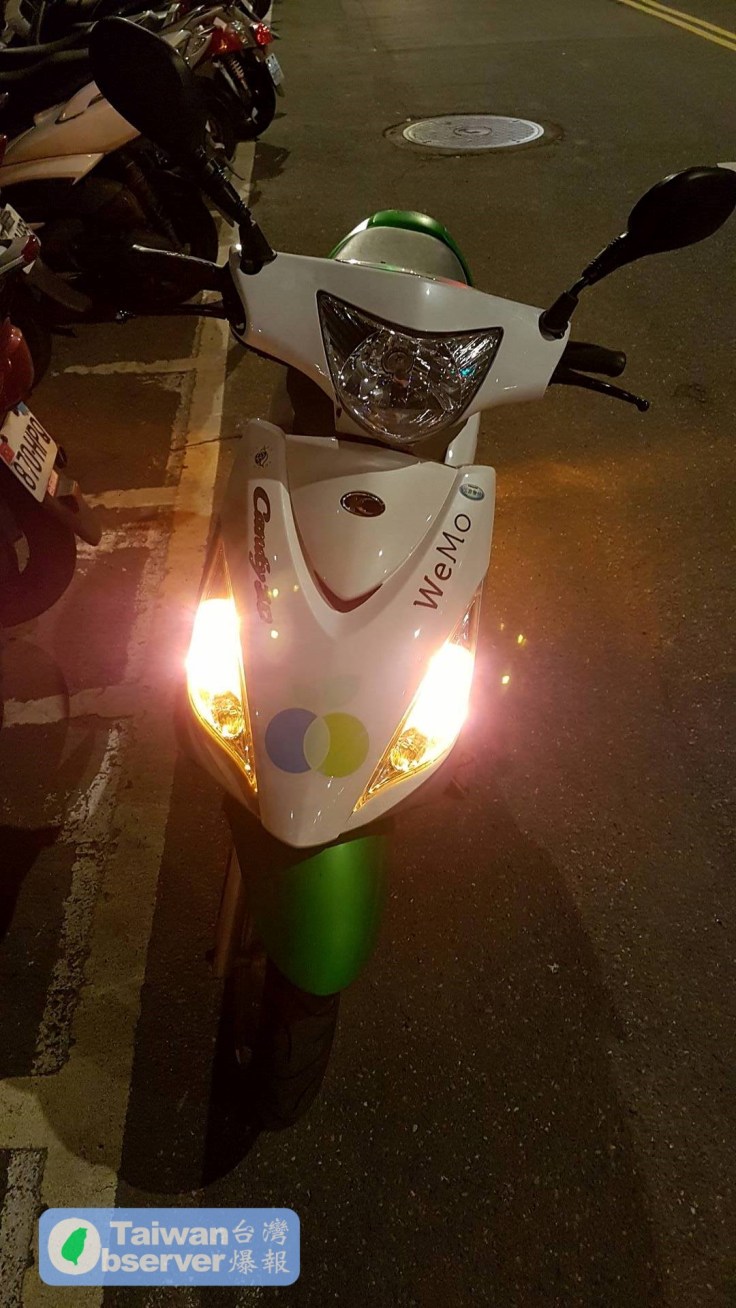
WeMo electric scooters

This week I finally tried the WeMo electric scooter service for the first time.
WeMo is a stationless rental scooter, it is basically the “oBike” concept applied for electric scooters.
You need a scooter? You find one nearby on the map, take it, ride where you want and leave the scooter on any scooter parking spot when you’re done.
I love the concept, and I feel it could improve a lot of things if it is used on a large scale.
24281874_10156800363222542_1856857802_o.jpg
Registration
Anyway. First things first, creating an account. That one made me postpone more than once, because you need to provide many documents:
– ARC (or ID)
– Driving license (it is a green plate so a car driving license is ok, I used my taiwanese car license to register, please comment if you succeded to register with an international car license, that would be sweet if they are accepted)
– Picture of yourself
– Credit card information. There are 2 payment types, either direct transaction from your credit card, or you can load some money into some WeMo wallet, and then use that money little by little as you use WeMo scooters.
After 1 working day I got an email saying my account was ready and I could start using the service.
Using WeMo app to do everything
 
Using the app, you see where scooters are and you can book one, or just walk to it and start using it.
I have used WeMo scooters 4 times in total. Every time the scooter was extremely new and in great quality: the 4 different scooters that I got didn’t have more than 250km mileage in total.
I have read some bad reviews in the WeMo app reviews where people complained about the quality of some scooters. Before any ride, better check the scooter, the general condition, the brakes, etc. In my case all was really new and good.
You control everything through the app.
– Opening the trunk (there are 2 helmets inside)
– Starting the rental
– Stopping the scooter (once it’s “started” it’s ready to accelerate any time you turn the throttle. “Stopping the scooter” is equivalent to shutting down the engine on a gas scooter.
– Returning the scooter: stops the renting and ends the ride.
The scooter
Once you open the trunk using the app, you find 2 helmets inside (one is half dome helmet for the passenter, and another one is a little bigger, covering the ears and has a wind protector, more suitable for the rider).
There is also a few disposable fabric papers that you can put in the helmet if you care about hygiene.
The scooter is pretty much like a normal gas scooter. It has the same controls, brakes, lights.
It is quite lighter overall, very comfortable to ride alone, and requires a little bit of skills for riding slow speed with a passenger, but that’s also true for regular scooters.
24251044_10156800363252542_1473378868_o
Riding WeMo
Once started, it is just like a normal scooter, the controls are the same: throttle, breaks, lights, direction lights.
The max speed i got was a steady 54km/h on flat. Not very fast but I was not slower than the average riders on the road.
The autonomy if the battery is 100% when you take it is about 45km. You can see how much battery is left on each scooter on the smartphone app before you start the rental.
You can see how many remaining kilometers the scooter can ride at all times.
Also I noticed than when the scooter autonomy is going below 10km, the max speed is lower, about 38km/h and the acceleration is also weaker).
With 2 people on the scooter, the acceleration is still good and the top speed still above 50km/h even with 2 passengers.
Even though speeding is not recommended, I find that the top speed is slightly below what I would hope for. A few times, I wanted to overtake someone quickly, but I simply couldn’t. On my regular 125cc scooter, I can go faster for a few seconds in certain situations to safely take over, or avoid some danger. That’s something to consider, the riding habits are slightly different here.
Pricing
 
As of November 2017:
– Initial price is 15NT for 6 minutes
– Next is 2.5NT per minute (99 seconds red light really suck, it would be neat if the price calculation did not count the stop time, specially as this is an electric scooter)
Out of the 4 rides I took, this is approximately the prices that I paid:
– 38NT for 4km distance in my first ride, because I took some time to explore the options
– 30NT for 4km (better luck at the red lights?)
– 60NT for 8km (Elephant Mountain to Nangang exhibition center).
– 23NT for 3 MRT stations late at night
In my opinion this is a good solution at night for a 5-15km distance when there are no more MRTs and you don’t want to pay 300+NT for a taxi.
Conclusion
After those rides I feel very happy that this solution exists. It completes the portfolio of transportation possibilities, and gives more freedom than MRT or bus.
It may not be something you want to use every day, but once in a while you need to go somewhere far from MRT stations, or you don’t want to take UBike for 30mn+ ride, well, if you have the app installed and the account already created, you can check if there’s a WeMo nearby.

24259328_10156800363257542_1276695610_o

Taiwan Retrocession Day 2017

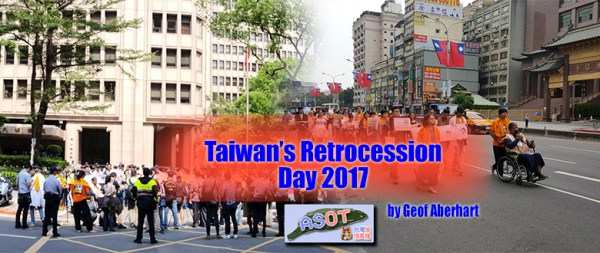
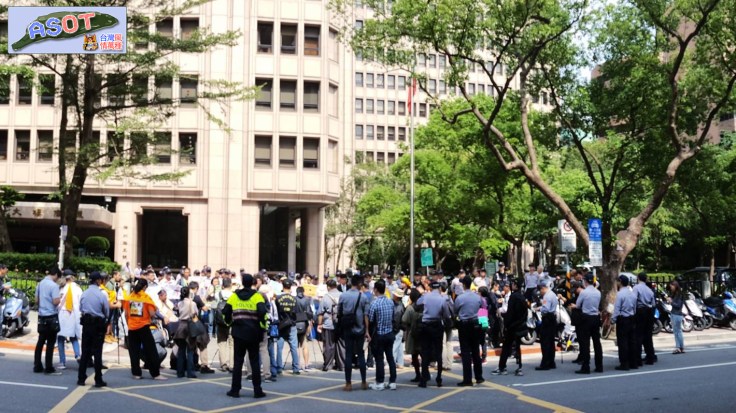
This week – and today specifically – marks the 72nd anniversary of Japan’s surrender of Taiwan to the Chinese Nationalist forces in the wake of the former’s defeat in World War 2. The arrival of Nationalist administration, however, was not and has not been universally embraced, and today, some issues remain unaddressed. Among those is the subject of the on-going protest sit-in by Aboriginal land rights advocates at National Taiwan University Hospital MRT Station in Taipei. Originally located on Ketagalan Boulevard, a short distance from the Presidential Office, in June the protesters were driven out and relocated to their current site, which plays host on weekday evenings to various talks on Indigenous issues by a range of speakers.

22688694_1788501757845221_4416771914446620584_a
Photo by: Geof Aberhart

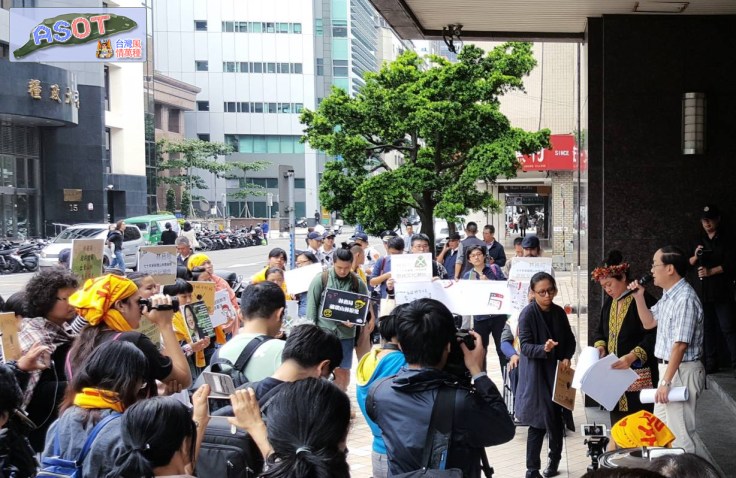
On Monday, October 23rd, protest leaders Panai Kusui, Nabu Husungan Istanda, and 馬躍.比吼 Mayaw Biho led a small group on a “short journey” to three government locations around Taipei City: the Executive Yuan, the Forestry Bureau, and the Government Office Building (home to the Department of Land Administration), to again state their case. Led by the wheelchair-bound Nabu Husungan Istanda, the group marched along the streets to the sound of traditional Aboriginal chants and to loud explanations of the situation; “This week marks the 72nd anniversary of Taiwan’s retrocession, and we Indigenous peoples of Taiwan wish to be able to celebrate alongside our Chinese brethren. However, Retrocession Day is not a day in which we can also take joy, as what has not been retroceded is the rights and lands that have been stripped from us.”

22792583_1788502504511813_4652808096492689175_a
Photo by: Geof Aberhart

Speaking with the director of the Forestry Bureau’s Forest Planning Division Chang Tai, Panay Kusui laid out their case, including questioning the reduction in Aboriginal land to be set aside by the government from 1.8 million hectares (equivalent to Aboriginal territory at the time of the Japanese turnover of Taiwan) to just 0.8 million, about the replacement of logged natural forests with single-species artificial forests, and questioning the director-general on statistics regarding Aboriginal people arrested for exercising traditional rights of hunting and collecting plants. Nabu Husungan Istanda, for his part, was more impassioned; “This is our home! We lived here for thousands of years before you arrived! You should be learning from us, not from other countries or from things you’ve just made up! We don’t want your pretty words, we want action!”

From the Forestry Bureau, the group made their way to the Government Office Building, met by rows of several dozen police officers at the gates, including several wielding riot shields. Again, the case was set out, with the activists demanding that the friendly words made by President Tsai in her apology to Taiwan’s Aboriginal peoples be more than just words. Finally, they returned to their adopted home at NTU Hospital MRT Exit 1, where their “Nobody is an Outsider (沒有人是局外人)” sit-in continued into its 242nd day, with no sign of an official response from the government.

22770676_1788502497845147_8342847356466527705_a
Photo by: Geof Aberhart

For more information on the protests, see Wikipedia (https://en.wikipedia.org/…/Indigenous_Ketagalan_Boulevard_p…) or this article from early in the protests at The News Lens (https://international.thenewslens.com/article/63907).

#Aborigines #landrights #RetrocessionDay #原住民 #還我土地 #沒有人是局外人 #光復節


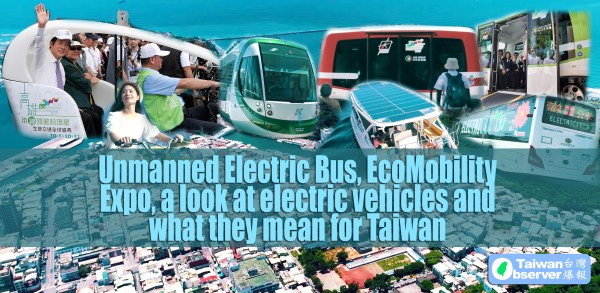
Unmanned Electric Bus, EcoMobility Expo, a look at electric vehicles and what they mean for Taiwan

The dawn of electric powered transport couldn’t come soon enough especially for Taiwan and it’s over crowded cities that are dependent on oil for 100’s of thousands of smog producing engines. Taiwan and world’s future depends on the ability to adopt Electric Vehicle Industries to their respective economies and cultures. Not only will the EV industry bring more jobs and better opportunities for more people but it will also create safer roads and better environments for the people across the island and globally.

This year the hype is around the first ever driverless bus in the world to be unveiled at the 3rd EcoMobility World Festival in Kaohsiung, Taiwan this year. “The EcoMobility World Congress 2017″  (  生態交通全球盛典 )  will bring together local representatives and transportation experts from the public and private sectors to discuss how to make sustainable transport livable, shared and intelligent.

robot-2676510_1280

Local governments, non-governmental organizations, educational institutions, businesses, media and civil society are invited to join the Congress and connect, exchange, showcase, report and learn.”

All of humanity’s hopes and dreams now depend on a better economy created in The EV industry. For all the nations that join to create a more sustainable future there is a promise of future proof societies. An Economy that is more specialized and provides more jobs to people around the island can demonstrate to the world a future proofed society that is ready to finally end our dependence on oil for transportation.
Three key meetings have already taken place in Kaohsiung; the Young Professionals meeting explored career paths for youth and recent graduates, there were also Cultural and technical tours for business and industry insiders and finally a global congress met for the Transformative Urban Mobility Initiative (TUMI).

A great honor falls to the city of Kaohsiung to host the EcoMobility World Congress 2017 this year. The first congress met in Suwan, South Korea in 2013 and the second was held in Johannesburg in South Africa in 2015. The goal of each congress is to introduce the general public to a safer more reliable mode of transport that should reduce traffic and pollution for over crowded cities like the ones found in Taiwan and other places around the world.

There will be more than just meetings and seminars at this bi-yearly event, You will also learn what living in “Eco-Mode” is. At the EcoMobility World Expo visitors will have a chance to explore the future of transportation up close and personal. The first congress introduced the ‘One neighborhood, one month, no cars’ model that asks citizens to abandon all oil-burning engines and accept a new way of life and living. With each progressive EcoMobility Congress and EcoMobility World Expo entire communities of people have shown that EVs can be more cost effective, convenient, and even bring communities closer together.

bike
Photo by:  http://www.ecomobilityfestival2017.org

“The Festival will enable the city to free valuable urban space from car traffic by opening the streets of the Hamasen neighbourhood in Kaohsiung exclusively for ecomobile modes of transport such as walking, cycling, public transport, shared vehicles and light electric vehicles.”

Once there you will be able to imagine life without foul pollution filling your lungs and other  senses, you’ll learn how life with EVs has a more manageable pace, and most of all you’ll get to experience a closer harmony with the natural world using modern technology. If you’re looking for a glimpse into the future of mankind, you’ll be able to see it on display in Kaohsiung until October 31st!


Are you ready to make a step in the right direction for the future of all kind? If so, get down to Kaohsiung this Double Ten Holiday. Click the link below for more info.

https://ecomobility.org/ecomobility-world-festival/ecomobility-festival-kaohsiung/


By Paul Chambers


Visa waiver plan for Philippines citizens has been approved by new premier Lai Ching-te


In efforts to promote the new Southbound Policy, newly minted premier Lai Ching-te has approved a plan for a visa waiver program for citizens of the Philippines good for 14 days or fewer. This was according to Minister without portfolio Chang Ching-sen. The earliest possible implementation is said to be in October.

The Ministry of Foreign Affairs will be releasing more details in the near future, regarding when the plan will be put into action and how the new program will be implemented.

There was a previous plan to have the visa waiver program up by June 1st of 2017, but this plan was postponed. The official reason was that there needed to be more time to complete the inter agency coordination and other relevant procedures. Later the plan was postponed again as the Philippines’ President Duterte put the city of Marawi under marshal law following terrorist attacks.

The latest meeting held by MOFA in mid September cleared up the last of the questions and the policy was sent to the executive yuan for approval. This is just one of the many steps the government is taking to deepen its relationships with its neighbors to the South and bolster its soft power in the region.


Netflix set to make a Taiwanese series: A Taiwanese Tale Of Two Cities

The Taiwanese film industry is getting some much deserved international attention. Netflix has just announced that they will be working with Taiwanese companies Kbro Media and Good Image production to bring award winning director Nelson Yeh’s vision to life. The director has been nominated and won many awards in Asia and was the director of the 2016 film “The mad king of Taipei”. The project has already received a government grant from the Ministry of culture. The ministry are supporting the project for helping portray Taiwan’s story with a global perspective.

The story will center around 2 women one in Taipei and one in San Francisco. The woman living in Taipei is a traditional medical practitioner and the one living in San Francisco is a programmer fora silicon valley company. The two women will swap lives and homes for a new cultural adventure. We will see their journeys, from their unique perspectives, in this story that brings a new light to the different lives of Taiwanese around the world.

The series is expected to start filming in late 2017. So its safe to say we might see this in our Netflix ques before 2019. Hopefully this series can bring new light to the lives and culture of the Taiwanese people in a global perspective.


A Taiwanese Tale of Two Cities with its universal appeal is more than just a collaboration with Netflix, it’s an opportunity for Taiwan content creators on the world stage,”  -Nelson Yeh, Director

Said John Derderian, Director of International Originals at Netflix, “We are excited about A Taiwanese Tale of Two Cities bringing the multi-cultural worlds of Taiwan and America to our 104 million members across 190 countries. This is a testament to how great stories travel.” -John Derderian, Director of International Originals at Netflix

MỘT LAO ĐỘNG VIỆT NAM BỊ THIỆT MẠNG Ở NGHI LAN

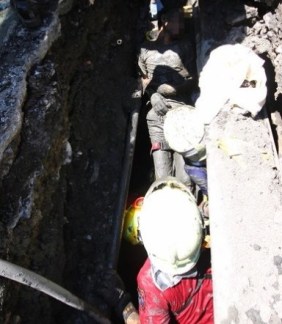
Theo tin mới nhất , ngày 11/09/2017 một lao động Việt Nam ở tỉnh Nghi Lan (Đài Loan) đã thiệt mạng sau khi hầm chất thải nơi anh này đang làm việc bị sập.

Theo một số thông tin, người đàn ông này là lao động bất hợp pháp ở Đài Loan làm công việc đào hầm xử lý chất thải ở địa phương và được trả công theo ngày. Danh tính anh này vẫn chưa được xác định.worker

Quá trình giải cứu người này ra khỏi hầm mất một tiếng rưỡi. Truyền thông Trung Quốc đăng tải hình ảnh của anh này sau khi được đưa ra khỏi hầm, toàn thân anh bị phủ bởi bùn và gần như nằm bất động.

Đội giải cứu đã rửa đi lớp bùn ở phía trên và thực hiện các động tác sơ cấp cứu nhưng không hiệu quả. Sau khi đưa đến bệnh viện, anh đã tử vong.

Hiện tại cảnh sát và cục di dân đang cố gắng xác định danh tính của người này để có thể liên lạc với gia đình của anh.

Cục Công Trình Công Cộng cho biết nhà thầu đã không đảm bảo đầy đủ cơ sở hạ tầng để xảy ra sự cố đáng tiếc trên.

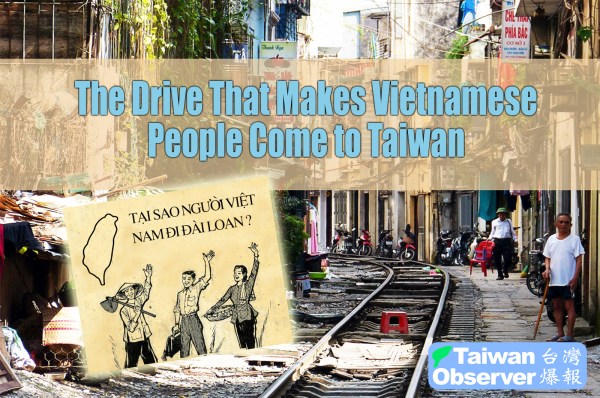
The Drive That Makes Vietnamese People Come to Taiwan

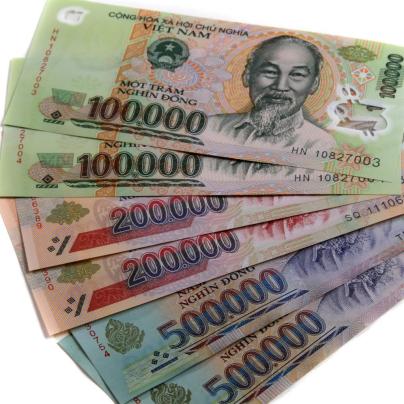
moneyAfter coming to Taiwan, it is not difficult to find a Vietnamese community living and working here. According to estimations, there are 170.000 Vietnamese workers (vieclamdailoan.vn) and around 4.000 Vietnamese students in Taiwan. Most Vietnamese who come to Taiwan come for employment in the labor sector. They are usually workers or farmers from the countryside or poor areas in Vietnam with a hope to make and save some money while working in Taiwan. Others hopefully earn money to support their family. The main reason is the basic salary in Taiwan is higher than in Vietnam, more specifically, in Vietnam, the basic income for workers is around 230USD per month (vietbao.vn), but in Taiwan a worker can earn approximately 700-800USD per month. Moreover, the cost of living in Taiwan is also considered to be a good reason for Vietnamese worker to come here, as it is relatively affordable to live here for a typical Vietnamese worker. Besides, in big cities such as Taipei or Kaohsiung, there are a lot of job opportunities.
Taiwan is well-known as one of the most developed countries in Asia with a per capita income of

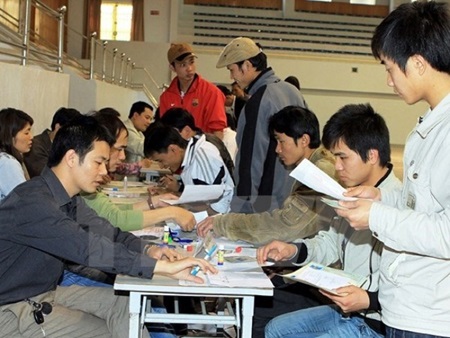
US$ 14,000 per year. Compared to Japan or Korea, Taiwan attracts more Vietnamese people for work because the agency fees are only about US$4,000 which is much lower compared to Japan. In Japan a foreign worker has to pay around US$ 6,500 or US$ 7,500. Taiwan also does not require a high qualification for working or a big deposit. Additionally, the process to leave only takes 3 or 4 months and it are easier for migrant workers based in Taiwan. Electronic equipment and other manufacturing are the most popular fields in Taiwan, workers here can easily find jobs like assembling mobile phones, working at the a machine shop or a garment factory.20151127153403-2.jpgMoreover, they also can be health-care aides in hospitals or medical treatment facilities or even work as a housekeeper. Since 1/1/2017, the basic salary for foreigner working in Taiwan increased from 20.008NDT to 21.008NDT/month. Besides this Taiwan adjusted the standard of insurance such as social insurance or health insurance to make conditions better for foreigners who is working here.
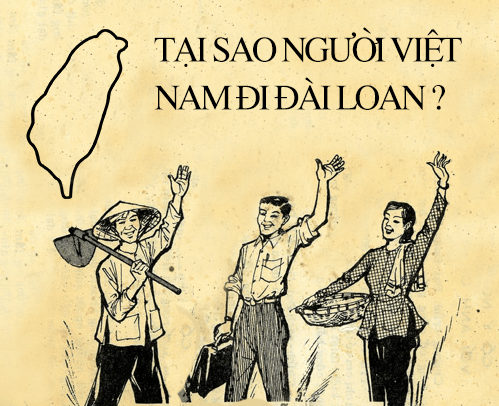
There are a lot of Vietnamese women who get married to Taiwanese men so they can come to Taiwan. If you are a Vietnamese woman who just moved here, Taiwanese people will possibly ask you “Are you married?” A long time ago in Vietnam taking Taiwanese husband became a trend. Many young girls in poor areas or in the countryside chose to marry a Taiwanese man with the belief it could change their lives and bring a better brighter future. At the time it suddenly became a hot topic in Vietnam. There were many stories and issues mentioned in the news. However, lately this trend seems to be going down and people do not pay so much attention to it anymore.

Final.VietnamesePeepz.png

There are still many young Vietnamese people interested in Taiwanese culture and hope to come to Taiwan for university. The Taiwan government provides several scholarships to try to support them studying in Taiwan. There are different reasons that drive Vietnamese people come to Taiwan but mostly for working or getting married, overseas students only make up a small amount. So it is clear that Taiwan is always a hot choice for Vietnamese worker.

by Annie Nguyen

South Bound Policy and Changes for Overseas Workers

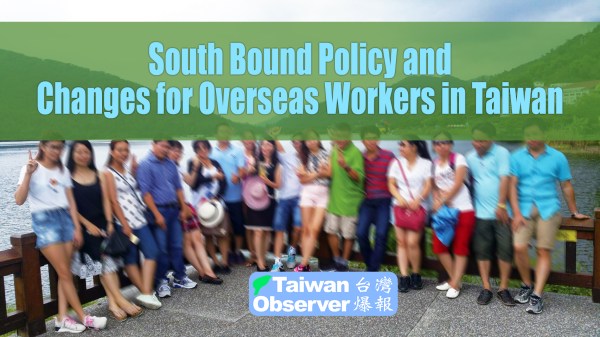
The current government is taking its “Southbound Policy” seriously and overseas workers are benefiting from it already. The “Southbound Policy” itself aims at strengthening ties with ASEAN countries, which is becoming very handy in many societal and economical aspects of cooperation between Taiwan and countries like the Philippines, Thailand, Vietnam, Malaysia or Indonesia.

On August 31 2017, Taiwanese president Tsai Ing-Wen (蔡英文) declared that her government is planning to create a special public infrastructure fund in order to boost  partnerships between the island nation and the ASEAN countries. The initial sum to be spent on the fund totals around US$3.5 billion. Tsai has also promised to boost the restructuring of Taiwan’s Overseas Investment & Development Corp. This will be overseen by the Ministry of Foreign Affairs.

So, ASEAN countries and their citizens will receive help from Taiwan in their own countries, how about all those who left for Taiwan in search of a better paid work and better life for their families?

The Ministry of Labor announced on September 1, 2017 that amendments to the Employment Services Act would be soon implemented for the sake of protecting overseas workers employed in Taiwan. After the implementation of the amendment, each employer will be charged based on the number of illegal foreign workers employed. The current fines for employing illegal overseas workers stand from NT$ 150,000 to NT$ 750,000. So, if an employer decides to employ 10 illegal overseas workers they may expect to be fined between NT$ 1,500,000 and NT$ 7,500,000 if caught.

Additionally the amendment should discourage employers from unlawfully holding overseas workers’ passports. If there isn’t a good reason for doing so, employers will be fined between NT$ 60.000 and NT $300.000 for confiscating workers passports, and banned from employing foreign laborers in future. If an employer is found sexually abusing, harassing or trafficking overseas workers they will be barred from employing such workforce from 2 to 5 years. If they do so repeatedly they won’t be allowed to hire foreign workforce anymore. If an agent is found guilty of the same sex crimes against overseas workers they will be fined from NT$ 300,000 to NT$1,500,000 and barred from working as a labor agent. If they fail to report an employer engaging in such activities they will be fined from NT$ 60,000 to NT $300,000

Things are slowly starting to look better for overseas workers in Taiwan. The next big thing many hope for is abolition of the compulsory curfew in many dormitories in which overseas workers live.


Create a website or blog at WordPress.com

Up ↑